
How to prepare for The Traka 360: the guide that leaves nothing out
Complete guide to preparing for The Traka 360: prerequisites, training blocks, solid nutrition, sleep strategy, and the mistakes that destroy weeks of well-executed work.
Push Rider
Performance cycling coach
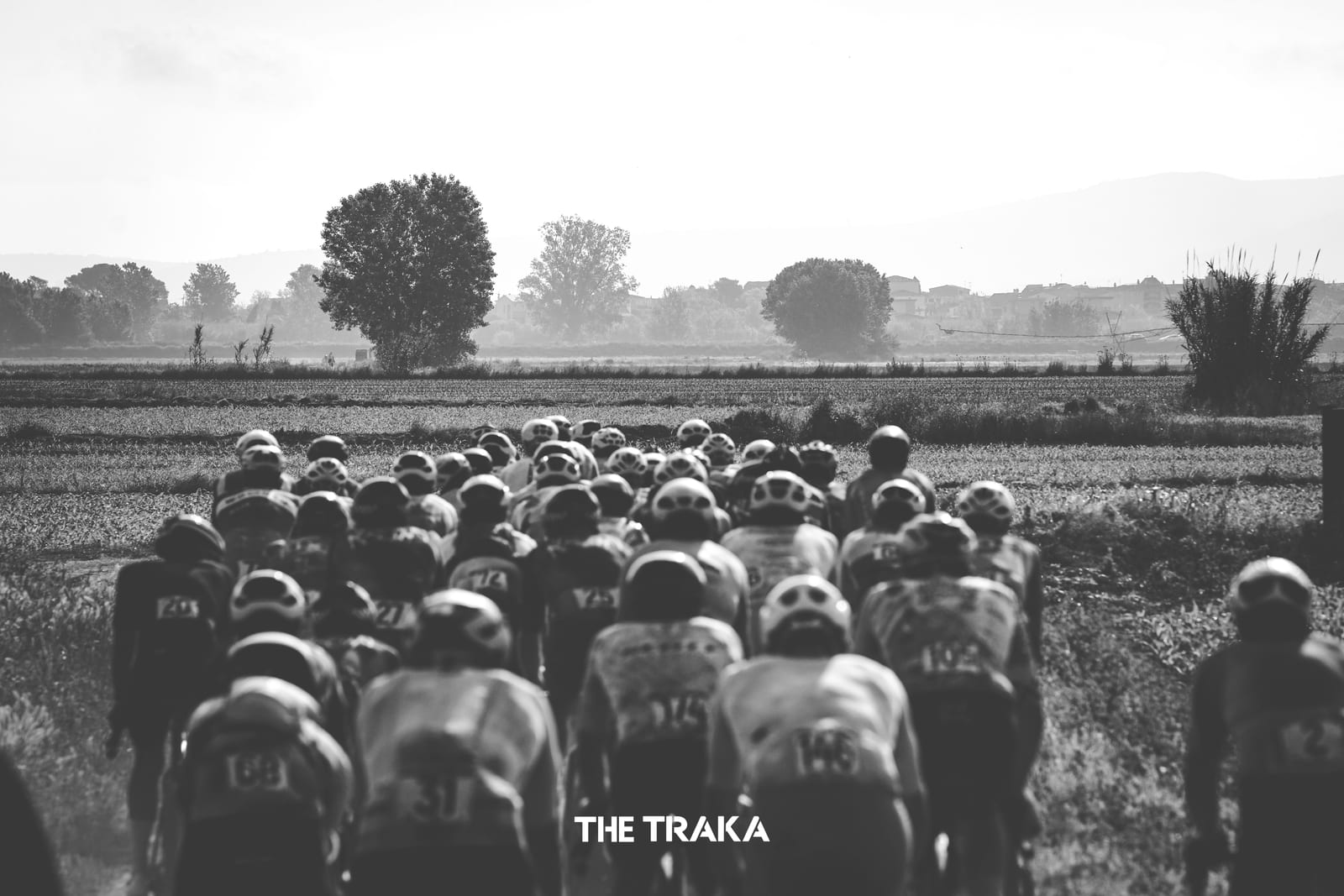
TL;DR. The Traka 360 is not won with more watts but with more judgement. You need to have completed a race similar to the 200, at least 20 weeks of specific preparation, rides of between seven and nine hours, mastery of solid in-race nutrition, and a sleep strategy that you treat as a tactical decision, not a luxury.
Some races are conquered through training. Others are conquered through judgement. The Traka 360 belongs to the second category. We are not talking about an extended version of the Traka 200: we are talking about a race that is different in its very nature. Around 360 kilometres through the tracks of the Girona region, more than 6,000 metres of elevation gain, between 20 and 30 hours of effort for the average amateur, at least one full night on the bike. If you arrived here looking for a 12-week plan with FTP percentages, this article will disappoint you. If you arrived looking for what you truly need to know, keep reading.
Is the Traka 360 just a longer Traka 200?
No. That is the most dangerous confusion and the one that leads to the most abandonments. If you have already read our article on preparing for the Traka 100 or you know the demands of the medium distance, you know that those versions require sustained power, pace management, and correct nutrition. In the 360, power ceases to be the primary limiting factor. What stops you is not a lack of watts: it is running out of cerebral glycogen at hour 22, making the wrong call on whether to sleep or keep going, your intestines rejecting gels for twelve hours with no solid backup plan, or the nocturnal cold dropping your core temperature so that you spend two hours pedalling at 40 percent of your capacity without realising it.
The key difference is this: the Traka 200 is a physical performance problem. The Traka 360 is a problem of sustained resource management over time, with progressive degradation of every capacity, including decision-making.
You can find all the information about the race on the full Traka race page and explore other options in the gravel races directory.
What do you need to have done before starting to prepare for the Traka 360?
There is a minimum requirement that is non-negotiable: having finished a race equivalent in distance to the Traka 200 or longer. It does not matter if you completed it slowly. What matters is that your body and mind have crossed that threshold. If you have not crossed it, the Traka 360 will not be a difficult adventure. It will be a type of suffering for which you have no tools.
- At least one race of 150 km or more completed under similar conditions (mixed terrain, significant elevation)
- Ability to ride consecutive days with high volume without overuse injuries
- A minimum of 12 months of structured bike training in your history
- Having managed at least one night or early-morning ride on the bike
If you meet these points, you can start planning. If you are missing any of them, next year is a far smarter option than this one.
Why can’t you prepare for the Traka 360 in 12 weeks?
Because the body does not adapt to that level of demand in that timeframe. Full stop. The adaptations you need, in particular metabolic efficiency at low intensity, the capacity to oxidise fat as the primary fuel at sustainable paces, and intestinal tolerance to solid food over many hours, require physiological time. There are no shortcuts.
The reasonable minimum is 20 weeks of specific preparation. For many riders, 24 or even 28 weeks is appropriate depending on their starting point. If you have questions about how to structure your long-term preparation, a gravel cycling coach with experience in ultra-distance events can help you build the complete timeline for your situation.
How are the preparation blocks structured?
Planning for the Traka 360 is divided into three major phases.
Phase 1: Aerobic base and metabolic efficiency (weeks 1 to 8)
The goal here is not to get fit. It is to build the metabolic machinery that will work for 25 hours. Zone 2 work is the core of this phase: long sessions at conversational intensity, where you teach the body to burn fat efficiently. FTP matters less here than learning to ride for many hours without destroying glycogen stores in the early hours.
- Progressive weekly volume from 10 up to 15 to 18 hours in peak weeks
- Long weekend rides: start at 4 hours and build to 6 to 7 hours in this phase
- Real nutrition practice on every ride of more than 3 hours
- One short night ride to get familiar with the dynamics of riding in the dark
Phase 2: Specificity and simulation of real conditions (weeks 9 to 16)
This is the phase that separates those who finish from those who do not. Peak rides reach 7 to 9 hours. Back-to-back weekends are mandatory: a Saturday of 6 to 7 hours followed by a Sunday of 4 to 5 hours on loaded legs. This is not to make you suffer: it is to teach the body to function with partially depleted glycogen, which is exactly what will happen in the Traka from kilometre 200 onwards.
- Back-to-back volume weekends (at least two or three times during this phase)
- One overnight simulation ride: set off at 10 or 11 pm and ride until dawn
- Solid food practice on every ride of more than 8 hours (see nutrition section)
- Simulation of nocturnal cold conditions wearing your actual race clothing
Phase 3: Taper and sharpening (weeks 17 to 20)
This is not the time to add more volume. It is the time to arrive fresh and with a clear head. Volume drops progressively but some quality stimuli are maintained to avoid arriving flat. In these final weeks, review your sleep plan, your mechanical kit, and your nutrition strategy as though you were executing them tomorrow.
What happens with nutrition after 8 to 10 hours of racing?
Gels stop being sufficient and the intestine begins to rebel against hyperosmolar products. After 8 to 10 hours in motion, you need real, solid food. Not as a supplement: as the foundation. The body cannot process 300 to 400 calories per hour from liquid sources for 25 hours without serious gastrointestinal consequences.
The essentials for the Traka 360:
- Train your gut from the start of your preparation, not in the final month
- Practice with the real foods you will use in the race: rice, potato, banana, sandwiches without aggressive ingredients
- Establish an hourly fuelling protocol and stick to it even when you are not hungry
- Always carry a solid emergency option that you know you tolerate well
- Caffeine is a tactically valuable resource for the night, not a substitute for calories
If you want to read more about managing race logistics, including feed stations and equipment, the article on The Traka: travel and logistics in Girona covers those aspects in detail.
How is sleep managed in the Traka 360?
Sleep is not a defeat. It is a tactical decision. The riders who finish the Traka 360 in the best physical and mental condition are not necessarily those who sleep least: they are those who sleep at the right moment and wake up with purpose.
The most dangerous window is between 2 and 5 in the morning, when biological sleep pressure reaches its peak. If you have been pedalling for many hours and enter that window without having slept, cognitive capacity drops dramatically. Route decisions become slow. Pain is perceived with greater intensity. Motivation collapses.
Practical sleep strategy
- Decide before you start when you are going to sleep; do not wait until you are too tired to decide
- A nap of 20 to 30 minutes before the critical nocturnal window can keep you functional for 4 to 6 more hours
- Always carry the minimum to sleep if you need it: an ultralight sleeping bag or an emergency blanket as insurance
- Practice short naps during training, especially on long simulation rides
What mistakes destroy months of well-executed preparation?
They are always the same. And they almost always happen in the first 150 kilometres.
- Going out too fast. The euphoria of the start and the cool conditions are deceiving. If you are above your race pace in the first hours, you will pay heavily in the early morning.
- Not eating before you are hungry. Hunger at these distances arrives late, and by the time it does, the caloric deficit is already enormous. Eat by the clock, not by the signal.
- Neglecting mechanical reliability. A breakdown that is an inconvenience in the Traka 200 can end your race at 3 in the morning in the Traka 360. Check your equipment before you start and carry what is essential to fix the most common failures.
- Ignoring the nocturnal cold. Temperature drops several hours before dawn. If you arrive damp from sweat and do not layer up in time, moderate hypothermia will rob you of power without you noticing until it is too late.
- Making sleep decisions out of pride. Stopping for 25 minutes does not cost you the race. Continuing in a zombie state for 4 hours does.
When does it make sense to work with a coach to prepare for the Traka 360?
When the volume of variables to manage exceeds what you can handle alone with common sense and a few books. The Traka 360 requires individualising your training load, nutrition strategy, and sleep plan to your specific situation: your available hours, your starting point, your injury history, your digestive tolerance. A gravel cycling coach with experience in ultra-distance races can significantly reduce your margin of error, especially in the periodisation of loading blocks and in simulation weekends.
It is not essential to finish the Traka 360. But it can make the difference between finishing it managed and finishing it surviving.
Are you ready to take the next step?
If you have made it this far, you already have more clarity about what the Traka 360 involves than most of those who sign up each year. The next step is deciding whether you face the preparation with a structured plan or by accumulating kilometres without direction. If you want to work with us on a plan specific to your situation, tell us where you are now and what you want to achieve at apply. We analyse your starting point and tell you whether it makes sense to work together.
Frequently asked questions
How much weekly volume do I need during peak training weeks for the Traka 360?
Your highest-load weeks should be around 15 to 18 hours on the bike, with individual rides lasting between 7 and 9 hours. Volume is not built overnight: it takes several months of controlled progression to reach those figures without getting injured.
Is FTP still useful for preparing for the Traka 360?
As a general reference, yes. As the main planning tool, no. At these distances, metabolic efficiency at low intensities and tolerance to accumulated fatigue are far more decisive than a peak watt number. FTP guides quality work, but it should not become an obsession.
How many hours can you sleep during the Traka 360 without losing too much time?
One or two naps of 20 to 30 minutes represent a much smaller time loss compared to the hours you can waste riding at 40 to 50 percent of capacity due to extreme drowsiness. Most riders who finish the race in good shape sleep between 45 minutes and 2 hours in total.
Can I prepare for the Traka 360 without having done the Traka 200?
Yes, but you need to have completed an equivalent race in terms of distance and demands: between 150 and 220 kilometres with mixed terrain and significant elevation gain. What matters is not the name of the race but having managed that experience in your body and your mind.
What is the technical difference between the Traka 200 and the Traka 360 in terms of demands?
The Traka 200 is fundamentally a problem of power and pace management over 8 to 14 hours. The Traka 360 adds the management of the night, progressive cognitive degradation, the need for sustained solid fuelling, nocturnal cold, and tactical decision-making around sleep. These are races of a different nature, not just of different duration.
Preparing your next race?
Limited spots per edition. Training, nutrition and psychology integrated in one programme.
Apply now →