
How to prepare for The Traka 100: a guide for your first big gravel race
Learn how to prepare for The Traka 100 from scratch: an 8-12 week training plan, on-the-bike nutrition, gear, and pacing strategy to finish it without blowing up.
Push Rider
Performance cycling coach
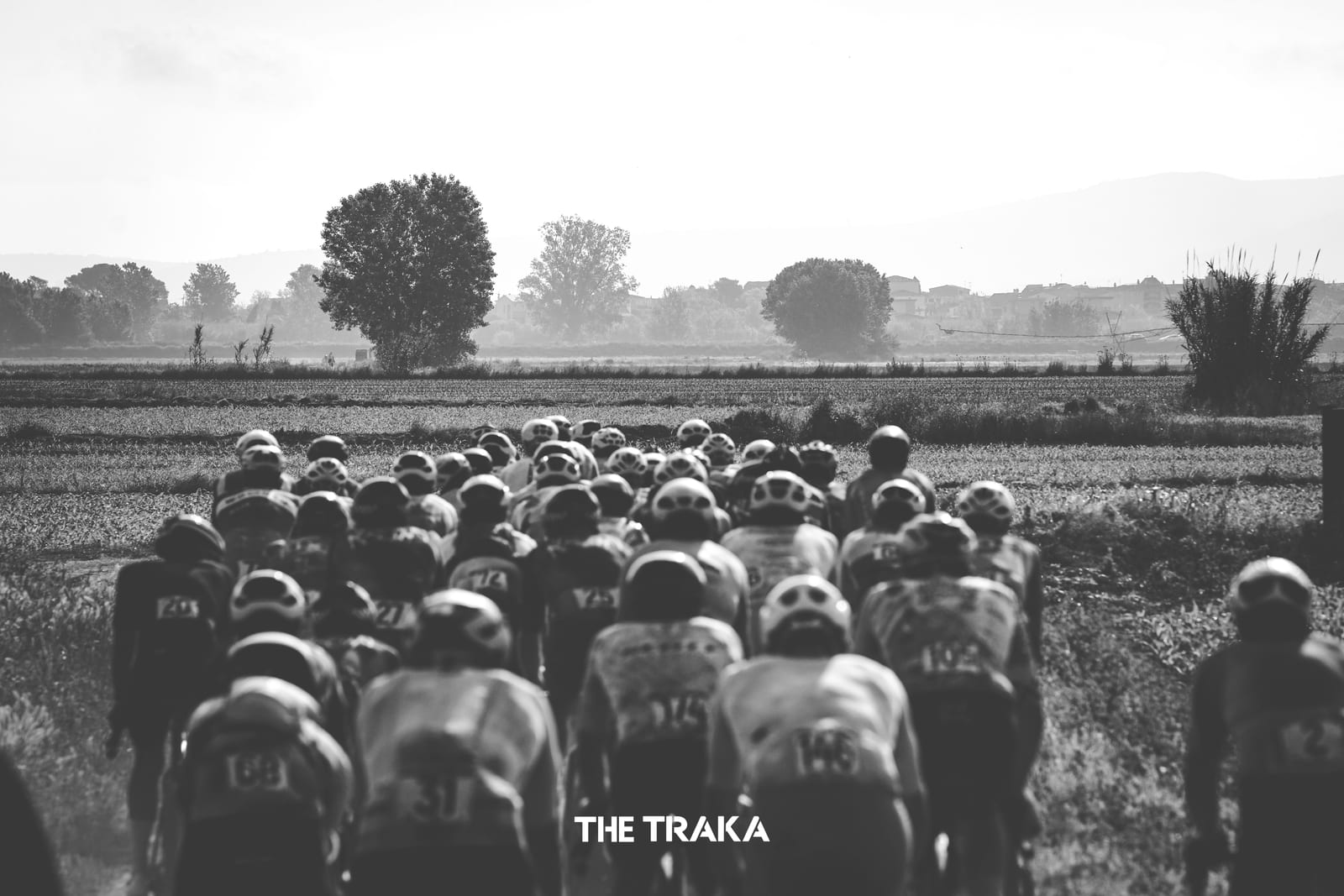
TL;DR. The Traka 100 covers approximately 100 km through the roads of Girona, with between 4 and 6 hours of effort for an amateur. You do not need prior long-distance experience, but you do need a solid aerobic base and between 8 and 12 weeks of specific preparation with long rides, some intensity, and a simple nutrition strategy.
If you are reading this, you probably have The Traka 100 on your radar and are not quite sure where to start. That is normal. The race has an imposing name, but the 100 km distance is designed precisely for cyclists who want to make the jump into gravel racing without the first experience being a nightmare.
This guide explains what you can expect on race day, how to structure your preparation, and what decisions to make around nutrition and gear so that you cross the finish line with energy left and wanting to come back.
What exactly is The Traka 100, and how does it differ from the 200?
The Traka 100 is the entry-level distance in the Traka ecosystem. It runs through the roads and tracks of the Girona region, with a moderate elevation profile and around 100 km of route. For a fit amateur cyclist, the typical duration is 4 to 6 hours of real effort.
The difference from the Traka 200 is not just double the kilometres. It is a qualitative leap in everything else:
- The 200 requires managing a night or early-morning section, which implies different logistical and psychological preparation.
- The accumulated muscular fatigue in the second half of the 200 has no comparison with the 100.
- Nutrition over 4-6 hours is manageable with simple strategies. Over 10-14 hours, mistakes cost you dearly.
- For the 100, you do not need to have completed a long-distance race before. For the 200, that prior experience is recommended.
If you come from road cycling or have been riding gravel for one or two years without having raced, the 100 is your ideal entry point. If you already have the 100 in your legs and want to take the next step, check out our Traka 360 preparation guide where we cover both distances in greater depth.
How fit do you need to be to complete The Traka 100?
You do not need to be an exceptional cyclist, but you do need a real base. An FTP around 2.5-2.6 W/kg is enough if the profile is moderate and you manage your pacing well. The most important thing is not your peak threshold but aerobic endurance: the capacity to sustain 4-5 hours of pedalling at a controlled intensity.
Signs that you are ready to prepare for the 100:
- You can complete rides of 2.5 to 3 hours without it being a struggle.
- You train between 6 and 8 hours per week consistently.
- You have ridden on gravel terrain or dirt roads on at least several occasions.
- You have no active injuries that limit your training volume.
If you are currently below 5 hours per week, before entering a specific plan for The Traka you need to build your base. A gravel cycling coach can help you design that prior block so that you arrive at the specific plan at the right moment.
How many weeks of preparation do you need?
Between 8 and 12 weeks is the reasonable range if you already have a base of 6-8 hours per week. Fewer than 8 weeks is risky if you have no long-distance experience. More than 12 weeks can lead to mental fatigue if the training load is not managed carefully.
The general structure of a 10-week plan for The Traka 100:
- Weeks 1-3 (aerobic base): progressive volume, no intensity. The long ride grows from 2 to 2.5 hours. Almost exclusively Zone 2 work.
- Weeks 4-6 (development): gentle intervals above threshold are introduced. The long ride reaches 3-3.5 hours, preferably on terrain similar to the race.
- Weeks 7-8 (specificity): long rides of 3 to 3.5 hours with some sustained tempo within them. Simulation of real conditions. Gear already tested. On-bike nutrition rehearsed.
- Weeks 9-10 (taper and race): progressive reduction in volume, maintaining some intensity so you do not lose feel. The final 5-7 days of relative rest.
The 3 to 3.5-hour long rides are the single most important element of the entire preparation. Do not replace them with shorter rides even when time is tight.
What do you eat and drink over the 100 km?
Nutrition over 4-6 hours does not need to be complicated, but it does need to be consistent. The most common mistake is not eating enough in the first two hours because you feel good. By the time your body sends a warning signal, it is already too late to fully recover.
The basic reference that works for most riders:
- Carbohydrates: between 60 and 90 grams per hour. Start eating 20-30 minutes after the start, not when you feel hungry.
- Fluids: between 500 and 750 ml per hour depending on temperature. In summer in Girona, adjust upwards.
- Sodium: add electrolytes to at least one of your bottles, especially if you sweat heavily.
On the food side: gels, bars, and fruit are the most practical options. What matters is that you have trained your gut with the same products you will use on race day. Do not try out new products on the day of The Traka. Test your nutrition strategy during the long rides in your specificity block.
The race feed zones cover part of your needs, but do not rely on them as your only source. Always carry enough to complete the section between feed zones without depending on what is available there.
What gear do you need for The Traka 100?
You do not need the most expensive bike on the market, but you do need a solid gravel bike and tested equipment. The essentials:
- Gravel or cyclocross bike with tyres of at least 38-40 mm. The Girona roads are not extreme, but you will appreciate the tyre volume.
- Low tyre pressure if running tubeless. Around 2-2.5 bar depending on your weight, the terrain, and the temperature.
- Two bottles or a hydration pack so you are not dependent on the feed zones.
- Small saddle bag or frame bag with a repair kit: spare tube, pump or CO2, tyre levers, multi-tool.
- GPS or cycling computer with the route loaded. Do not improvise navigation in a mass-participation event.
- Appropriate clothing for Girona’s weather on race day. Always carry a lightweight windproof shell even if you start in sunshine.
All the gear you will use in the race must be tested beforehand. Your training long rides are the perfect occasion to validate that your position, clothing, nutrition, and bike work together.
If you want to see how The Traka 100 fits into the calendar alongside other reference events, the gravel races directory gives you a complete view of the season.
How do you manage your pace to avoid blowing up in the final 30 km?
The Traka 100 is won or lost in how you manage the first 50 km. Most cyclists who suffer in the second half went out too fast, swept along by the adrenaline of the initial peloton.
The strategy that works for an amateur:
- Go out slower than your body is asking for in the first 20 km. Much slower.
- Use heart rate or power as an objective reference, not feel. Feel lies at the start.
- Eat and drink from kilometre zero. Do not wait until you are hungry or thirsty.
- Climbs and long ascents are where the most energy is wasted. If you are in a group, do not get pulled into paces that are not yours.
- Save something for the final 20 km. If at that point you still have legs, then you can push.
If you have doubts about how to tailor your specific preparation to your level and to the characteristics of the route, working with a gravel cycling coach can save you weeks of trial and error and ensure you arrive on race day in your best shape.
Summary: the five pillars of solid preparation for The Traka 100
- Real aerobic base: at least 6-8 hours per week during the weeks leading up to the specific plan.
- Long rides of 3 to 3.5 hours on gravel terrain, with on-bike nutrition practised.
- Tested gear: bike, tyres, clothing, and food with no surprises on race day.
- Conservative pacing strategy in the first 50 km.
- Consistent nutrition: 60-90 g of carbohydrates per hour from the very start.
If your goal is to cross the finish line with energy, enjoy the route, and end the day wanting to do it again, these five points are enough. If you want to know more about the race before committing to the preparation, check out the full Traka race page with all the event information. And if you are also considering the long distance, the Traka 360 preparation guide or the Girona travel and logistics guide may be useful reads before making that decision.
If you also want to optimise your performance and arrive in the best possible shape, apply to our training programme and we will design a plan tailored to your starting point and your race date.
Frequently asked questions
How long does it take an amateur to complete The Traka 100?
Most amateur cyclists finish between 4 and 6 hours. If you start from a solid base and manage your pacing well, a realistic goal is between 4.5 and 5.5 hours for someone who has never raced a long gravel event.
Can I prepare for The Traka 100 without ever having raced gravel?
Yes. The Traka 100 is designed precisely for that profile. What you need is not competitive experience, but a real aerobic base and completed long rides on gravel terrain. The 8-12 week specific preparation block takes care of the rest.
Is a road bike enough to finish The Traka 100?
Technically possible if you fit wider tyres and the terrain is not too demanding that year. But a gravel bike with tyres of at least 38 mm will give you much more comfort, safety, and control on the track and dirt road sections. In a 100 km event, comfort matters.
When should I start training for The Traka if the race is in May?
With a 10-12 week plan, you should start the specific training block in February. Before that, the months of November through January are ideal for building or maintaining your aerobic base with moderate volume and no goal-related stress.
What is the difference between training for The Traka 100 and any other 100 km gravel race?
The preparation principles are the same. What is specific to The Traka is the Girona terrain, with well-marked gravel tracks and a moderate elevation profile. If you know the terrain or can train in similar conditions, even better. But the training structure is valid for any gravel race of equivalent distance.
Preparing your next race?
Limited spots per edition. Training, nutrition and psychology integrated in one programme.
Apply now →