
How to prepare for Santa Vall 2027: a training plan for the two February stages
Complete guide to preparing for Santa Vall 2027 in Girona: 12-week block plan, back-to-back sessions, inter-stage recovery protocol, and mistakes to avoid.
Push Rider
Performance cycling coach
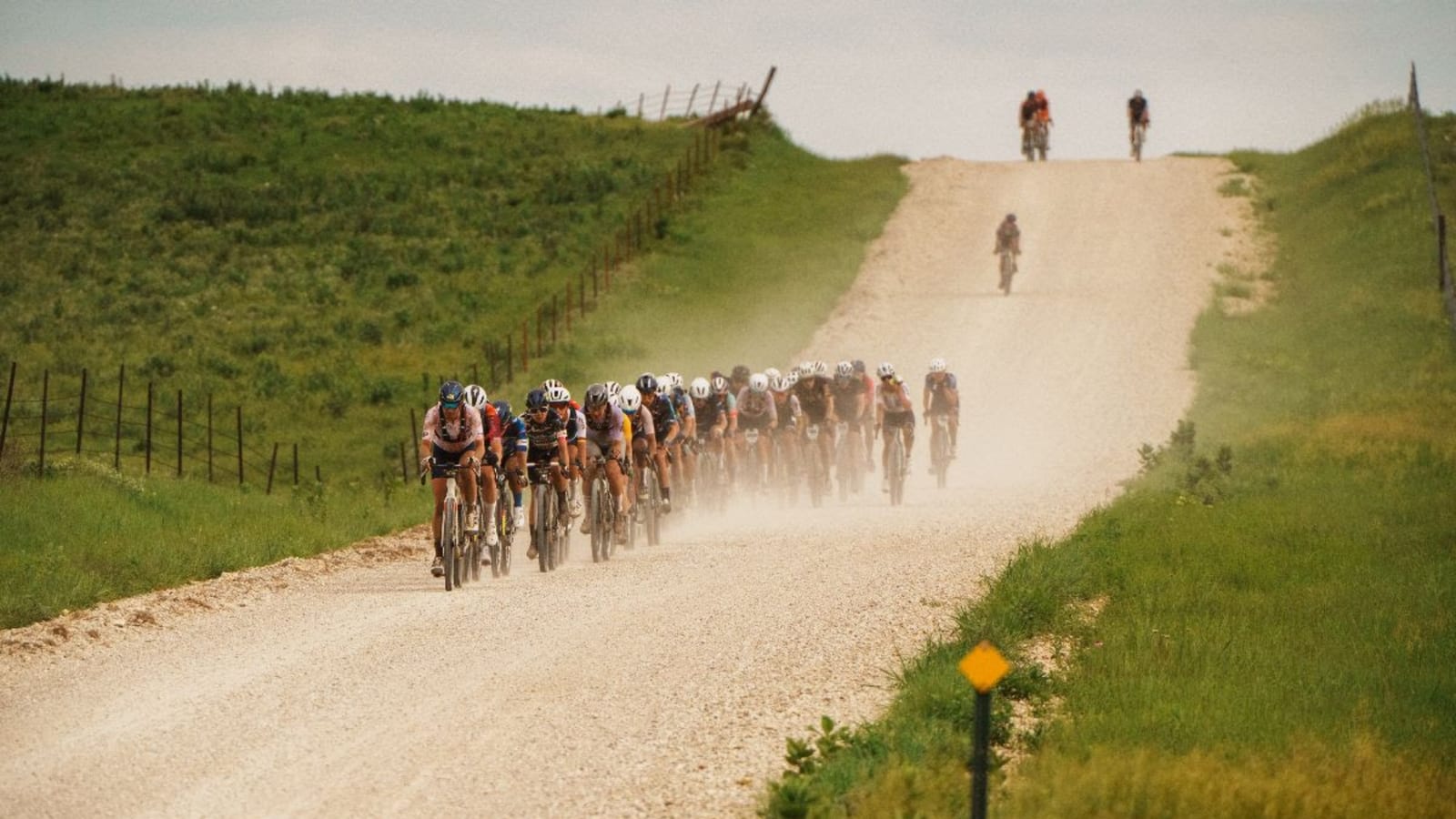
TL;DR. Santa Vall 2027 is two gravel stages in February in the Vall de Llémena — not a single race. Success depends not only on FTP but on arriving at Stage 2 recovered from Stage 1. The plan starts in November with three progressive blocks and a clear emphasis on chained Saturday-Sunday sessions that replicate exactly that scenario.
Preparing for Santa Vall is not like preparing for a single-day sportive. When you line up at the start in La Pineda de Sant Gregori on Friday 6 February 2027 knowing there is another stage the next day, the strategy changes completely. Below is the structured plan we use at Push Rider to take on this two-stage format with confidence.
If you are not yet clear on the format, the cut-off times, or the event logistics, check the Santa Vall 2027 registration guide and the Santa Vall race page first. This article focuses exclusively on training.
Why is Santa Vall different from any other gravel race?
Because it is two mandatory days. You cannot choose to do just one. Stage 1 covers around 120 km and close to 1,600 metres of elevation gain, starting and finishing in La Pineda. Saturday’s Stage 2 adds another 82 km and 1,100 metres. The terrain is the gravel of the Vall de Llémena: forest tracks, compacted dirt roads, and in February, possible mud and cold.
The factor most riders underestimate is that Stage 2 must be faced with the accumulated fatigue of Stage 1 already in your legs. You may have an FTP of 280 watts, but if you go too hard on Friday, you will not finish Saturday — or you will finish it destroyed. Effort management on day one, the inter-stage recovery protocol, post-stage nutrition, and sleep matter as much as raw fitness.
When does preparation really begin?
The race is on 6 and 7 February 2027. That means the serious 12-week block starts in November, specifically the first week of the month. Starting earlier is possible, but the 12 structured weeks must arrive intact at the race.
Kicking off in October with general volume is fine, but if you can only commit to one defined period, make it those 12 weeks. The plan described here assumes you arrive in November with a reasonable aerobic base — meaning you can sustain 3-4 hours on the bike without falling apart.
What is the structure of the 12-week plan?
Three blocks with different objectives, with recovery weeks interspersed.
Block 1: aerobic base (weeks 1 to 4, November)
The goal is to build the engine. Nothing spectacular, nothing that breaks you. All volume in low zones, with gradual progression.
- Indicative weekly volume: 8-10 hours for a cyclist with an FTP between 230 and 270 watts.
- Two long rides per week, one of them on gravel terrain or roads similar to those in the Vall de Llémena.
- First introduction to back-to-back sessions: Saturday 3 hours, Sunday 2 hours. No intensity, only accumulation.
- Strength work in the gym: two weekly sessions of squats, deadlifts, and unilateral exercises. Drop the gym when you enter Block 2.
- Week 4: recovery week at 60% of normal volume.
Block 2: intensity and strength-endurance (weeks 5 to 9, December-January)
This is where you add quality. Back-to-back sessions become the core of training. You simulate race conditions every weekend.
- Wednesday: interval session in zone 4 (threshold). Example: 3 x 12 minutes at FTP with 5 minutes of recovery.
- Friday: activation ride, 1 easy hour to arrive rested for the weekend.
- Saturday: long ride of 4-5 hours with segments at Stage 1 pace. The final 30 minutes you can push above zone 3 to simulate the end of the stage.
- Sunday: 2.5-3 hour ride in zone 2-3. Here you learn to move your legs under fatigue. This Sunday session is the most valuable in the entire plan.
- Week 8: recovery week.
Block 3: fine-tuning and specificity (weeks 10 to 12, January-February)
You sharpen and reduce physical stress. Fitness is already built. What you do here is arrive fresh.
- Volume drops 20-25% relative to Block 2 peak.
- One short interval session in zone 5 to maintain neuromuscular activation.
- Final back-to-back three weeks before the race. No more double-stage simulations after that.
- Race week: maximum 4-5 total hours, all easy, with two or three 20-minute activations at race pace.
How are back-to-back sessions executed?
This is the most specific element of the plan. A well-executed back-to-back session teaches you more about Santa Vall than ten individual rides.
The key lies in managing the interval between sessions. When you finish Saturday, you have approximately 14-16 hours before you start Sunday. Use that time actively:
- Within 30 minutes post-ride: carbohydrate and protein intake. Do not wait until you get home. A recovery drink or shake works. Target: 1.2 grams of carbohydrate per kilogram of body weight and 0.4 grams of protein per kilogram.
- Cold shower or contrast bath if you have access. If not, at least five minutes of cold water on your legs.
- Dinner rich in complex carbohydrates. Nothing heavy. Rice, pasta, potato. Avoid excess fat that night as it slows absorption.
- Go to bed early. Sleep hours between the two stages are training. Without eight hours there is no real recovery.
- Breakfast before Sunday: same as before a race. Carbohydrates, enough time to digest.
Replicate this protocol during the Block 2 back-to-back sessions. Do not improvise on race day something you have not practised before.
How do I train in cold and potentially muddy conditions?
The race is in February in Girona. Cold, humidity, and mud are normal conditions in the Vall de Llémena in winter. Ignoring this in training is a mistake.
- At least one ride per month in real rain or cold. Do not cancel because it is overcast.
- Practise eating with gloves on. If you cannot open an energy bar with gloves on, you have a problem in the race.
- Tyre adjustment: 700 x 40 mm or wider, low pressure (1.5-1.8 bar tubeless). Validate this in training, not the day before the race.
- Thermal management: Stage 1 starts cold but you can sweat on the climbs. Learn to remove a layer while moving without losing rhythm.
What are the most common mistakes when preparing for Santa Vall?
We see them repeated every year. The most critical ones are the following.
- Going out too hard in Stage 1. The excitement at the start leads many riders to go beyond their comfort zone. If you ride in zone 4 for the first two hours of Friday, Saturday will be a nightmare.
- Not training the back-to-back. Arriving at Santa Vall without having simulated a double-session weekend is arriving without specific preparation, regardless of how many total hours you have accumulated.
- Neglecting post-Stage 1 nutrition. Between stages is not free time — it is invisible training. The riders who recover best are those who eat, sleep, and manage the cold correctly.
- Reducing volume too soon in Block 3. Excessive tapering means you arrive nervous and with legs that will not activate. The reduction must be gradual.
- Ignoring equipment until the final week. A puncture without a quick fix, pedals that do not match your winter boots, or a handlebar poorly positioned for grip with thick gloves are problems that must be solved in training.
What role does a coach play in this process?
A generic 12-week plan gives you structure, but it does not know your history, your real availability, or how you respond to accumulated volume. The difference between a standard plan and one adapted to you is the difference between finishing Stage 2 with margin and finishing it merely surviving.
At Push Rider we design plans according to each cyclist’s profile: current FTP, available weekly hours, injury history, objectives within the race (finish, finish well, compete for a classification position). If you want us to review your specific situation, you can work with a gravel cycling coach or explore other races in the gravel races in Spain directory to build a calendar that makes sense with your goals.
Santa Vall has a limited registration window. If you have doubts about whether you are in time or whether your level is sufficient, start with the Santa Vall 2027 registration guide before committing to the training plan.
If you are already clear that you want to go for it with personalised support, apply here and we will assess together whether it is a good fit.
Frequently asked questions
How long does it take to prepare for Santa Vall from scratch?
If by scratch you mean no aerobic base at all, you need between 20 and 24 weeks. If you have a reasonable base, the 12 weeks of the plan are enough. Start evaluating your situation in September to know your starting point.
Do I need a minimum FTP to finish both stages?
There is no absolute number, but the ratio between your weight and your FTP (watts per kilogram) lets you estimate whether the cut-off times are a problem. With 2.5 W/kg and correct effort management, most cyclists can finish both stages. Below that threshold, Stage 1 can put Stage 2 out of reach if you do not control your pace.
Are back-to-back sessions mandatory in the plan?
Yes. They are the most specific element of the plan and the one that returns the greatest training benefit for a double-stage race. If you can only do one thing differently from a standard gravel plan, make it the weekly back-to-back during Block 2.
What tyres do you recommend for February conditions in the Vall de Llémena?
Mixed-tread or semi-slick tyres of 40 mm or wider, mounted tubeless with fresh sealant. Low pressure (1.4-1.8 bar depending on rider weight) improves traction on wet dirt and reduces the risk of punctures. Test them in winter training sessions; do not debut new kit on race day.
Can I prepare for Santa Vall with only 6 hours of training per week?
It is tight but possible if those 6 hours are well distributed. The principle is to prioritise quality over volume: one threshold session mid-week, a long ride on Saturday, and an active-recovery ride on Sunday. The back-to-back remains the core, even if total volume is lower. If you want to adapt the plan to that availability, we can do it from our application page.
Preparing your next race?
Limited spots per edition. Training, nutrition and psychology integrated in one programme.
Apply now →