
Dusty La Gileppe
Key facts
- Date:
- 8 Aug 2026
- Edition:
- 2026
- Type:
- One-day (XC / race)
- La Gileppe (Jalhay) · Hautes Fagnes (Lieja) · Belgium
- Distances:
- 70/110 km
- Series:
- Dusty Gravel Series
About
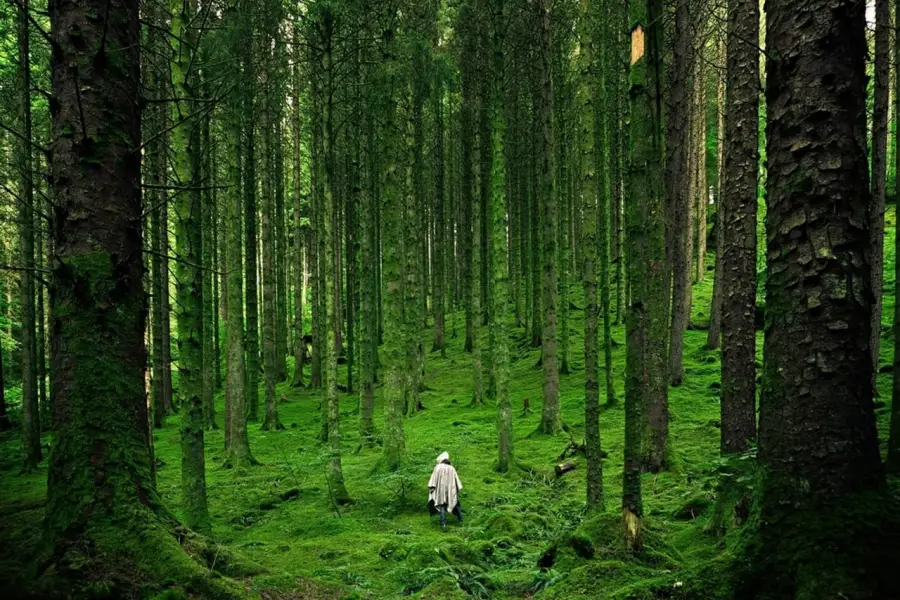
The Hautes Fagnes Natural Park in Liege province offers some of Belgium's most remote and atmospheric gravel terrain, where peat bogs, open heathlands and spruce forests create conditions that challenge even experienced riders. Dusty La Gileppe closes the Dusty Gravel Series at Jalhay with two distances of 70 and 110 km through this protected landscape near the German border. Unpredictable weather, soft trails and raw natural environment reward preparation and adaptability in equal measure. For Push Rider athletes ending their competitive season here, managing accumulated fatigue from previous events is as important as fitness: late-season performance management is a core component of the annual training cycle. The Push Training 360 plan tapers load progressively in the final weeks while the coach uses the weekly review to assess whether residual FTP and mental resilience are sufficient to deliver a strong final effort on the Hautes Fagnes trails.
Frequently asked questions
When and where does Dusty La Gileppe 2026 take place?
On 8 August 2026 in La Gileppe (Jalhay), in the Hautes Fagnes Natural Park, province of Liege, Belgium.
What distances are available at Dusty La Gileppe?
Two distances: 70 km and 110 km.
Is Dusty La Gileppe part of a series?
Yes. Dusty La Gileppe is the final event of the Dusty Gravel Series.
Where is the start?
The start is in La Gileppe, in the municipality of Jalhay, in the Hautes Fagnes area of the province of Liege.
How to prepare for Dusty La Gileppe with PUSH Training 360?
The PUSH Training 360 12-week program with weekly review and four phases suits the forests and peat bogs of the Hautes Fagnes. Phase 1 aerobic base builds endurance on wet and uneven terrain. Phase 2 threshold development works on sustaining pace over gentle but prolonged climbs of the high plateau. Phase 3 specificity includes profile simulations of Jalhay with sustained effort blocks on variable terrain. Phase 4 tapering reduces volume 10-12 days before the race. Nutrition is planned in three phases: pre-race loading, a fuelling strategy adjusted to the expected duration of the 110 km, and recovery. Pacing in the Hautes Fagnes requires effort control on peat bog sections, where rolling resistance drains more energy than expected.
Want us to coach you?
Pick your race and we build the plan: training, nutrition and mindset in a 12-week program with that event as the goal. Limited spots per edition.
Apply to the programRelated races
Bolero Turnhout Gravel
Turnhout · Belgium
22 Mar 2026
UEC Gravel European Championships / Houffagravel
Houffalize · Belgium
30 Aug 2026
The River by The Traka
Bouillon · Belgium
6 Sep 2026
Dusty Gravel Andenne
Andenne · Belgium
11 Apr 2026
Bolero Great Gravel
La Roche-en-Ardenne · Belgium
13 Jun 2026
Dwars door het Hageland Gravel
Aarschot · Belgium
21 Jun 2026